


Asserting Australia's First Nations Sovereignty into Governance
Colonialism
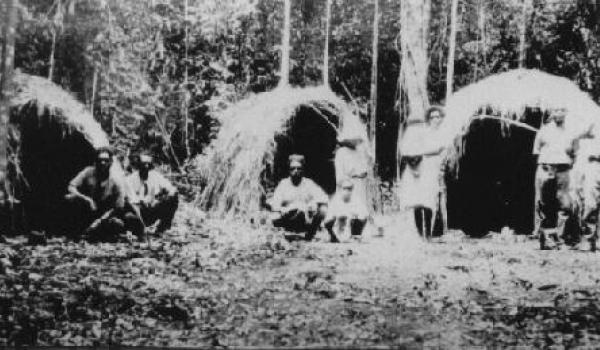
Aboriginal Slaves carted throughout USA and Europe as 'Circus Performers'
Body

A gruesome discovery revealed the fate of Tambo, an Aboriginal man put on show in the USA in the 1800s. The story begins in 1883 on Hinchinbrook and Palm islands, in Far North Queensland. Robert A. Cunningham, a recruiter for Barnum and Bailey’s circus, had traveled there to find subjects for his next show-stopping exhibition, Ethnological Congress of Strange Tribes. He sought to add to his collection of indigenous people, which already included Zulus from Africa, Toda from southern India, Nubians from southern Egypt and Sioux from the USA.
Are Aboriginal mothers too scared to ask for help in case it results having their children stolen?
Body

11 October 2016 (edited 12 October 2016)
Aboriginal prisoners used as slave labour in Northern Terriory
Body
The Northern Territory branch of the United Voice union says a program that allows prisoners to work at a central Australian salt mine for award wages is akin to slave labour.
The Territory Government says low-security prisoners are being trained for work at a potash project near Curtain Springs because the company had trouble recruiting staff.
Final Notice - The Black Line is Drawn
Body
The Old Country is now talking through the Fire. Be Aware. It is time to listen to the ancient voice, the Sovereign Voice, the ancient energy of the land. This is the true government, the true authority for this country.
All members of the parliament of the Commonwealth of Australia are warned of their knowing complicity in continuing and furthering acts of genocide by systematic denial of Aboriginal Sovereignty and of the need to reparate for crimes against humanity.
Why old theories on Indigenous counting just won’t go away
Body
My Australian-educated friends tell me they were taught at school that all Aboriginal people only counted one, two, three, four and 'many' ... there is abundant evidence of complex Aboriginal number systems extending to high numbers.
So why do some people believe the generalised view that all Aboriginal people can't count beyond four when there is abundant evidence to the contrary?
Why are so many First Nations kids in detention in the NT in the first place?
Body

Thalia Anthony, Associate Professor in Law, University of Technology Sydney
Across Australia, Indigenous children constitute at least 54% of children in juvenile detention centres. The proportion of Indigenous children in penal detention centres in the NT is higher than in any other state or territory: 97% of children in NT juvenile detention centres are Indigenous.
Eddie Murray: Back where it all began
Body
CULTURAL WARNING - Images and voice
June 2016 marked 35 years since the death of Eddie Murray in police custody. Eddie’s passing still causes reverberations today – it was in part the efforts of his father, Arthur Murray, which led to the establishment of the Royal Commission into Aboriginal Deaths in Custody. EMMA PURDY* reports.
Racism alive and well in the Territory
Body
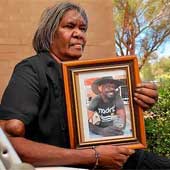
Five men from Alice Springs have used bankruptcy declarations to evade a court order to pay $180,000 compensation to a grieving indigenous mother of Trainee Ranger Kwementyaye Ryder over the death of her son when young white males went on a drinking binge. Brian Martin, the Commissioner of the Royal Commission in The NT Detention. Previously the Commissioner of the Royal Commission in The NT Detention of children in 2016, Brian Martin, was the Supreme Court Chief Justice of the Northern Territory and the judge in this case where he called a savage murder of an Aboriginal man, 'Manslaughter by negligence' when sentencing 5 white boys.
Town based Aboriginal reserves are in danger as land prices peak and mining investment slumps
Body
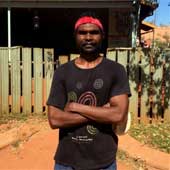
The State Government is reviewing the viability of WA's 274 Aboriginal communities, with details of the process due to be released in July, so the future of WA's 35 town-based Aboriginal reserves is set to come under the spotlight, with some residents determined to stay while others accept an offer of new houses in town. Town-based reserves are Aboriginal communities that formed around townships around the middle of the 20th century, as Aboriginal families were displaced from their bush homes and moved off cattle stations.