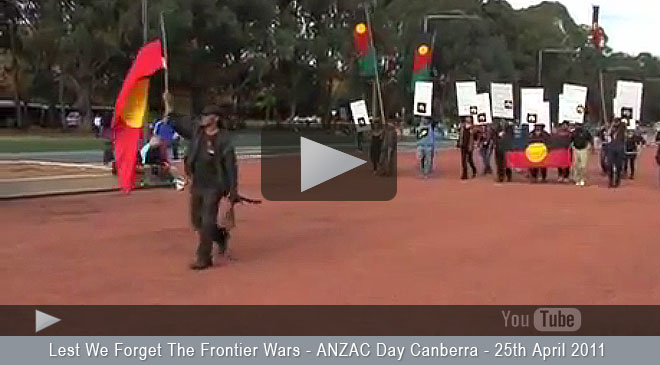
Frontier Wars

War Memorial should recognise the Frontier Wars: Researcher

Body

A researcher, who presented alarming numbers of the deaths in Queenslands Frontier Wars between 1788 and 1930 to the Australian Historical Association, said the estimated figure of 65,180 was "conservative" and could be as high as 115,000. A co-author of the report, historian Professor Raymond Evans, said the calculations were based on official records, witnesses' reports and the number of patrols undertaken by the colonial Queensland government's Native Police. - Pictured: Historian Professor Raymond Evans

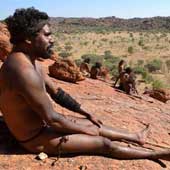
The nuclear wars waged against First Nations people

Body

The British have waged undeclared wars on First Nations peoples ever since 1788.

The murder and misery inflicted today reminds us of when settlers rode into communities on horse back and cut down extended families. In current times, the government does not only allow multi-national mining giants to rape the country and destroy ancient cultures, but they are trying to force First Nations people to live with the poisonous waste.

Gallipoli to Coniston - Remembering Frontiers - Seminar and Art Exhibition - Sydney

Body

Two days of looking at the subject of war and who fought in those wars, and including the why. Very importantly several sessions will be dedicated to the frontier wars in the 'unsettling' of the invasion of the traditional nations of this country, Australia. - Thursday 28th and Friday 29th August 2014, Level 3, Mary Ann House,
645 Harris Street, University Technology Sydney
Image: A still from the documentary 'Coniston'

Why the number of deaths in the Frontier Wars do matter

Body

Some researchers have said that there was 10 First Nations people death for each European killed in the process of the British Invasion. However research is now telling us that is was probably 40 to 1.

There are stories of massacres everywhere in the archives of the major cultural institutions of Australia and Great Britain. They are in the diaries, letters, journals and memoirs of colonial and postcolonial officials, troops, police, farmers, frontiersmen and women.

Out of the Silence

Body

by Robert Foster and Amanda Nettelbeck,
with extensive footnotes, index and photographs.

...Regardless of all the nice talks, policies and promises in England during the 1830s, South Australia was invaded in 1836. The British government called it settled instead and pursued a new approach to the treatment of Aboriginal people that would hopefully avoid the horrific violence that had been part of earlier Australian settlement. From now on any acts of violence or injustice towards Aborigines would be punished 'with exemplary severity'.