Media Releases

Don't sign your sovereign rights away with ILUAs

Body

Michael Anderson, spokeperson for Sovereign Union warns Aboriginal and Torres Strait people against signing Indigenous Land Use Agreements (ILUA), saying they cede their sovereignty for a few crumbs if they do.

"In Australia we have reached a very important time in our history. We must come together as distinct sovereign nations to jointly locate a national perspective on our sovereign rights," he writes.
Murrawarri claim renews sovereignty campaign

Body
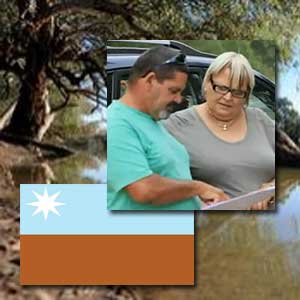
Fred Hooper and Gracie Gordon

A declaration of independence refreshes the campaign for Indigenous sovereignty over parts of Australia.

Fred Hooper, spokesperson for the Murrawarri Republic says if Queen Elizabeth can't provide proof of ultimate title the Murrawarri Republic would consider itself as an independent nation in the world and they'd be seeking United Nations assistance.

Eminent historian Professor Henry Reynolds says the issue of Aboriginal sovereignty has never been decided by Australian courts because in previous claims the courts have determined that they're not equipped to make a ruling.

A fight against paying rates on ancient homelands

Body

Both the Euahlayi and the Murrawarri Nations have joined in a combined effort to fight against paying rates on their ancient homelands.

This is an issue that has arisen as a consequence of the Brewarrina Shire Council seeking payment of rates for services on their ancient homelands.

The matter is beyond the scope and jurisdiction of the State courts so the Federal Attorney-General will now consult with the State and Territory Attorneys-General.

The Murrawarri Republic declaration

Body

On the 30th March 2013, Murrawarri people from the Culgoa River region of northern New South Wales, Australia, declared their Sovereignty of their lands under the name of the Murrawarri Republic.

They declare their continued independent statehood on behalf of their peoples and, by virtue of their natural ancestral and inherent right and on the strength of the resolution of their People, declare the Murrawarri State.

Australia's 'admissions against their own interest' - an alert to the Canberra Centenary

Body

On the centenary of Canberra (12 March) it is timely to draw attention to the fact that the sovereignty question, as it relates to Aboriginal Nations and Peoples, is now a living and active thought and aspiration, which is steadily developing into a nationwide movement.

It is now essential that we look at some international legal factors that give rise to the strengthening of our asserted positions of ‘sovereignty never ceded' and ‘continuing sovereignty'.

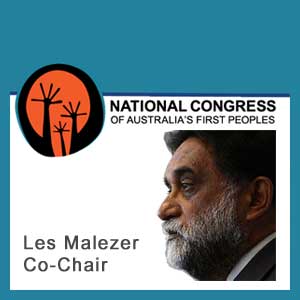
Les Malezer needs to be called to answer for a major fraud ...

Body

... re UN Declaration on the Rights of Indigenous Peoples

In a media release Michael Anderson, Convenor of the Sovereign Union movement said the opposition to the Act of Recognition carried to Commonwealth Parliament by the Sovereign Union protest on 13 February 2013 is very important as it highlights the First Nations peoples continuing resistance to the dictatorial traits of Australian governments, but we must also be very mindful of what it is that we are fighting for as sovereign entities, who have never ceded our sovereignty.

After the protest the Sovereign Union served formal notice of our opposition to the Act of Recognition to the Queen, via the Governor-General, the Prime Minister, all members of the Federal Parliament with copies to all member states of the United Nations.

The Apology is still an empty vessel: Sovereign Union

Body

In a letter sent to all Federal politicians on 12 February, 2013, Sovereign Union alerts them of the manipulation hidden within the apology that excuses the government of being complicit in authorising and legitimising the actions of Australian state governments.

The 'empty vessel' factor and the heartlessness of no compensation is an insult and a dagger to the heart and soul, thereby increasing the pain of traumatised Peoples. Many people argue that the effort on the part of former PM Kevin Rudd to apologise was worth hearing and that it did serve to act as a catalyst towards improving and easing the trauma of our people, but then to say that our people are not worthy of reparation and compensation for those affected is yet another major slap in the face for the survivors and their families of the Stolen Generations.

Governments 'Act of Recognition' has some very serious implications

Body

The current proposals for an Act of Recognition by the Commonwealth parliament is nothing more than a token gesture, but has some very serious implications, said Sovereign Union spokesperson, Michael Anderson.

"This Act of Recognition Bill does not provide for any referendum amongst First Nations and Peoples through out Australia to register whether they accept this imposed process or reject it; whether we want another process to create the fundamental foundation of the right of self-determination as Peoples, and thereby provide for individual Aboriginal nations to negotiate amicable outcomes through a treaty process that reflects the true ambitions, inherent rights and aspirations of each individual Aboriginal Nation.

National Congress 'Tent Embassy' event on 26th is not ours

Body

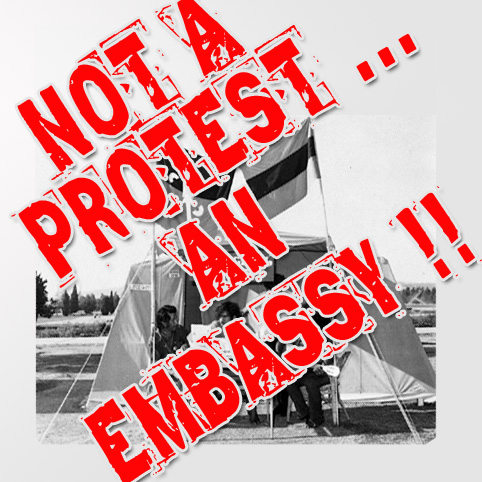
First Nations sovereignty activist, Michael Ghillar Anderson, makes clear that an event being organised by the National Congress of Australia's First Peoples (NCAFP) for 26 January 2013 at the Aboriginal Tent Embassy in Canberra, is NOT an Aboriginal Embassy initiative.

Mr Anderson, spokesperson for Sovereign Union emphasises that the NCAFP is a government funded organisation that has not gained the majority support of grassroots First Nations people.

He said that he recognises the Congress's efforts regarding some reforms but Les Malezer and Congress are publicly supportive of the token Constitutional reform.

Australia doesn't deserve a seat on United Nations”

Body

2012: Michael Anderson, the surviving member of the founders of the Aboriginal Tent Embassy in Canberra, wrote to the United Nations urging it reject Australia's bid for a temporary seat on the Security Council because of Australia's treatment of Indigenous Australians. In his letter Mr Anderson said Australia was a colonial power and in breach of international conventions in its treatment of its Indigenous people. Mr Anderson also criticised the Federal Government for its policies on asylum seekers.
"Aboriginal nations and peoples in Australia object to any support for Australia to have a temporary position on the UN Security Council,"