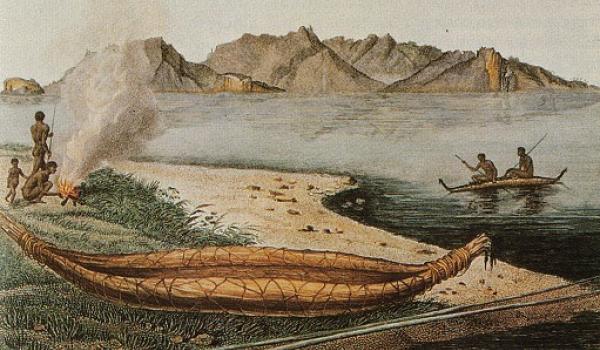
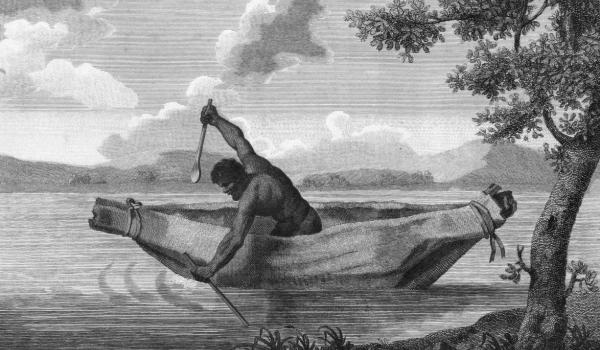
Tasmanian Style Bark Canoe. Drafted by MF Péron. (1807) - Vol. 2: Discovery trip to the southern lands
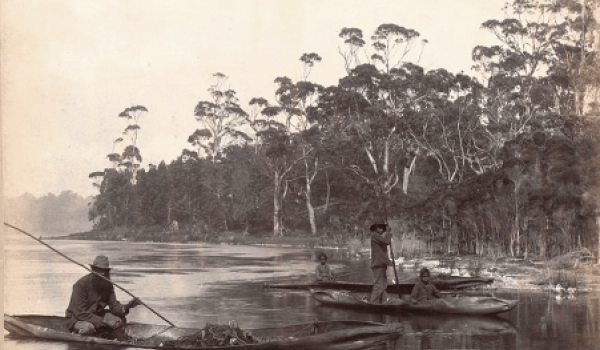
Gippsland Victoria -
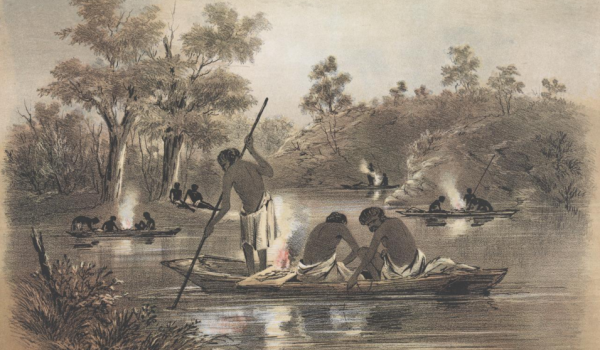
Night Fishing by S. T. Gill - From The Australian Sketchbook 1864
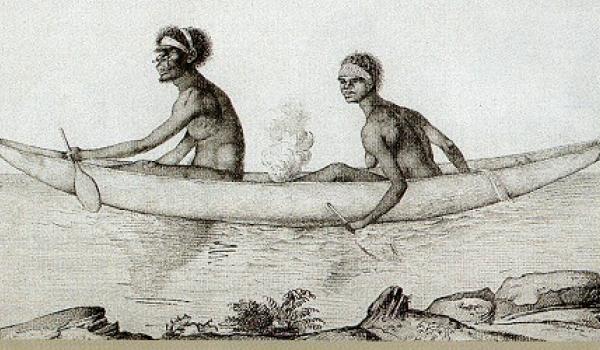
Van Dieman's Land Aborigines carrying fire in their canoe, 1802 - ( Nicholas Petit: Museum d'Historie naturelle, Le Harve)
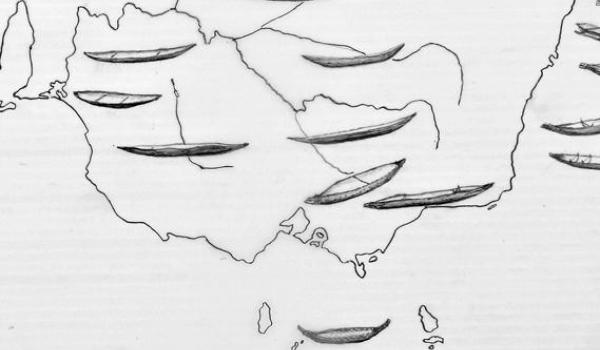
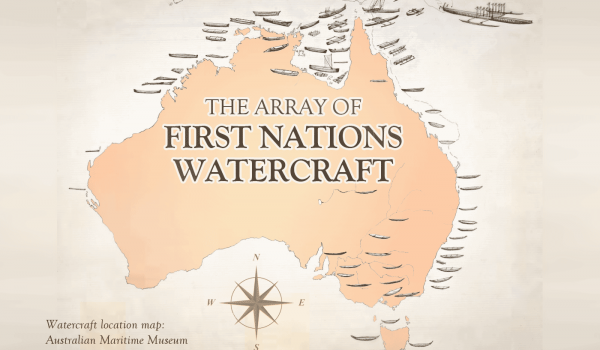
Victoria Northern Tasmania - Watercraft Map, 2014 by David Payne - Australian National Maritime Museum
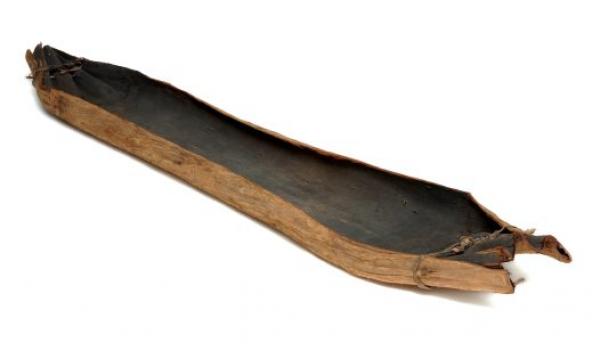
his is a bark canoe made in a traditional style from a sheet of bark folded and tied at both ends with plant-fibre string. The bow (the front) is folded tightly to a point; the stern (the rear) has looser folds. The canoe was made in 1938 by Albert Woodlands, an Aboriginal man from the northern coast of New South Wales. It measures 310 cm in length and 45 cm in width. (Australian Museum E045964)
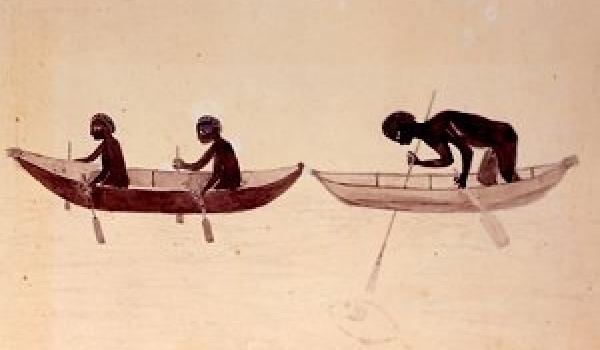
Bark canoes. This may record the fishing party observed by Joseph Banks at Botany Bay on 26 April 1770. 1768-1771 (British Library) Watercolour drawing taken during the voyage of the Endeavour. This may record the fishing party observed by Joseph Banks at Botany Bay on 26 April 1770. (British Library)
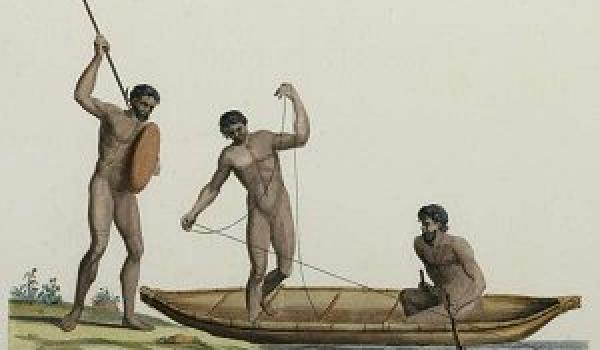
View in Port Jackson - Engraving, 1789. Arcadian view of Aboriginal men from Sydney, with a canoe, one of the men fishing, whist the other has paddles in his hands
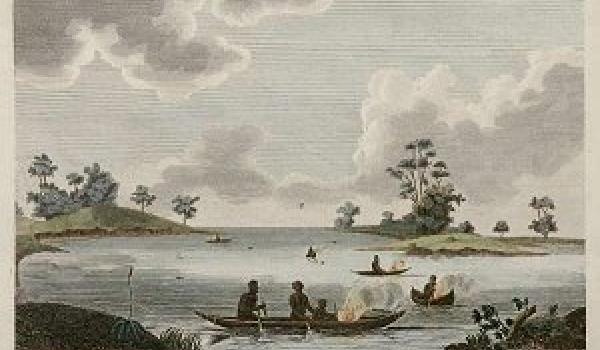
View in Port Jackson 1789 plate 4 from The Voyage of Governor Phillip to Botany Bay, published by John Stockdale, London, 1789)
Pemulwuy, Eora warrior - Other names Pimbloy, Pemulvoy, Pemulwoy, Bimblewove, Bumbleway, Pemulwuy
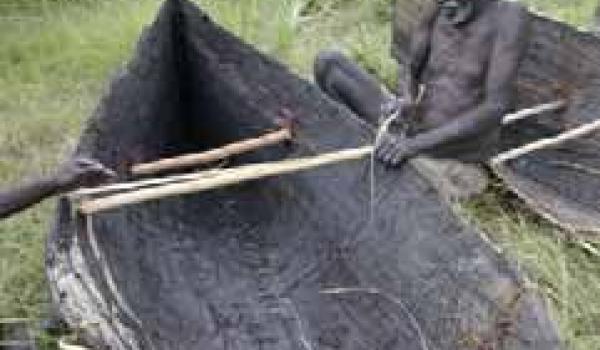
no details available
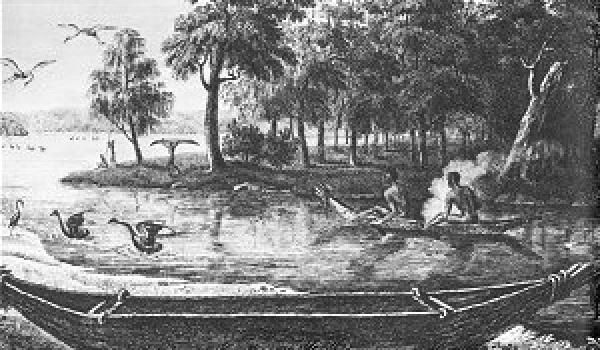
View in Port Jackson Engraving 1802
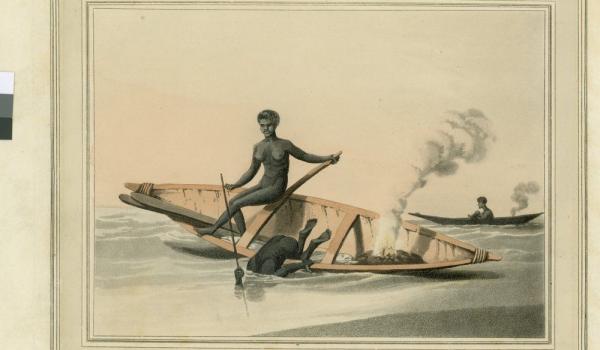
M. Dubourg's painting shows an Aboriginal woman in a canoe containing fish and a fire
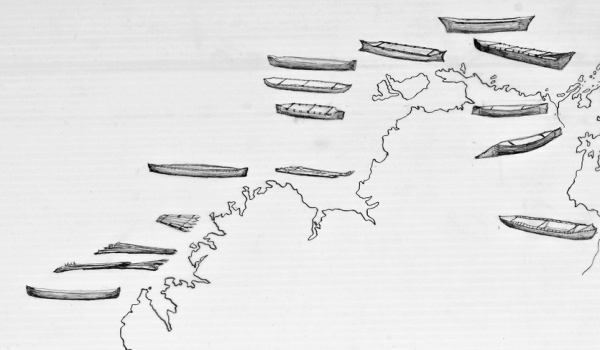
Kimberley NT detail - - Watercraft Map, 2014 by David Payne - Australian National Maritime Museum
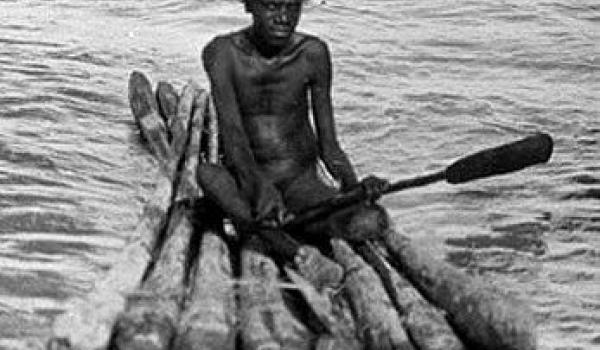
Worora youth on a mangrove tree raft (or 'kaloa'), Kimberley WA Western Photograph by Herbert Basedow
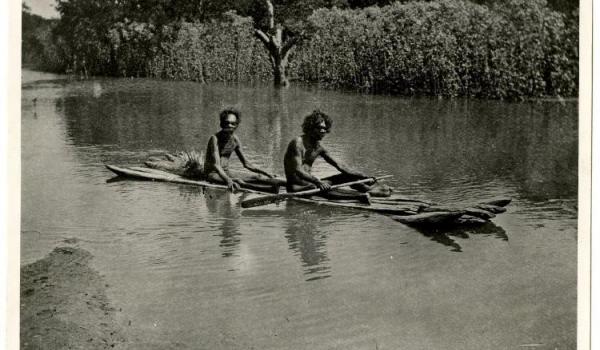
Double raft is when two rafts are tied together. The Bardi term is a ‘kalwa’ type, West Kimberley, WA
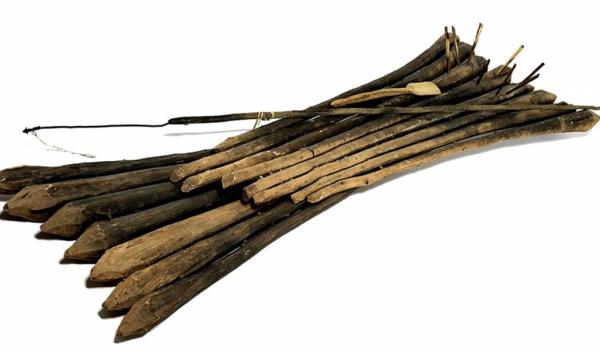
This raft was made by a Worora man from West Kimberley region, these rafts called 'kawlum' in Worora language. 'kalwa' in Bardi language and 'biel biel' by the Djawi community.
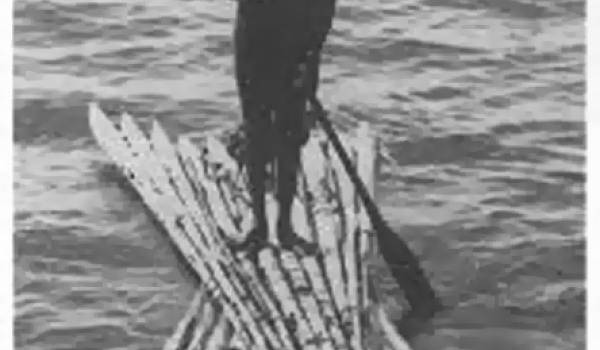
West Kimberley WA - double raft. Although mostly used in inlets and creeks, these were taken out to sea when weather permitted
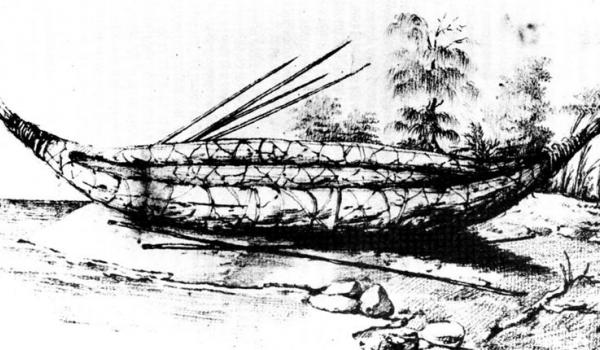
Tasmanian Bark Canoe Tasmanian Bark Canoe
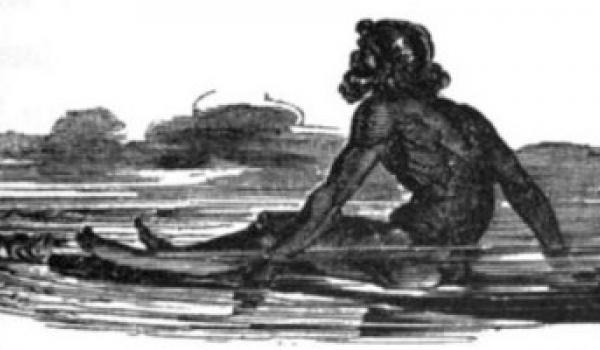
Raft rider, off Lewis Island, Northern Australia, 1818. From Phillip Parker King: Western Coast of Australia (1827), King observed, three natives, each native was seated on logs of wood, which he propelled through the water by paddling with his hands. The logs were mangrove tree stems; two or three logs were neatly and even curiously joined together.
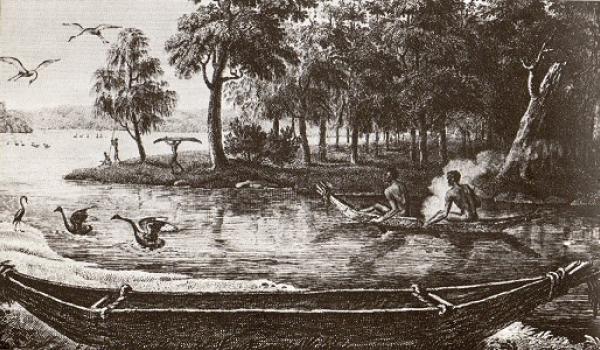
Tied bark canoes in use at at Port Jackson, New South Wales, 1802.
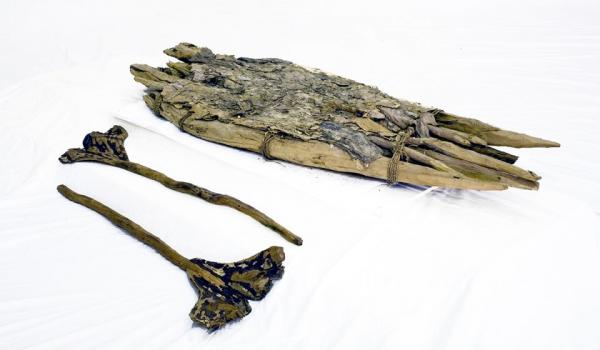
The walba has a finer end at the bow, where the maker has nitting all the logs tightly carved the branch ends smooth and sharp, then ktogether with strong handmade hibiscus rope. Queensland Outrigger - Postcard by Cairns based photographer
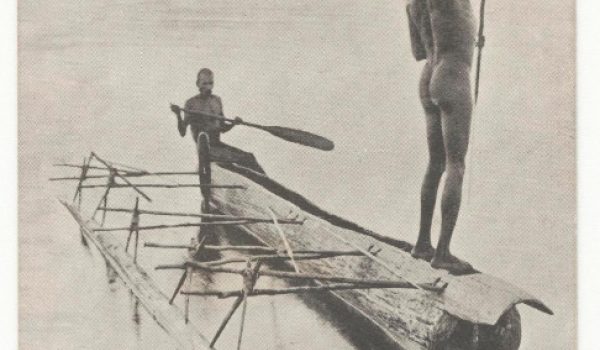
Outrigger
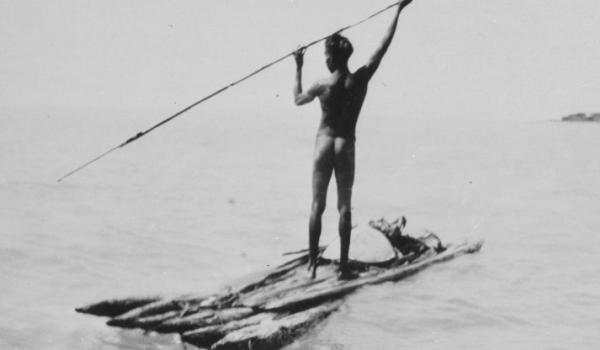
Aboriginal man fishing in Yampi Sound, ca.1930 Photo Frank Bunney SLWA
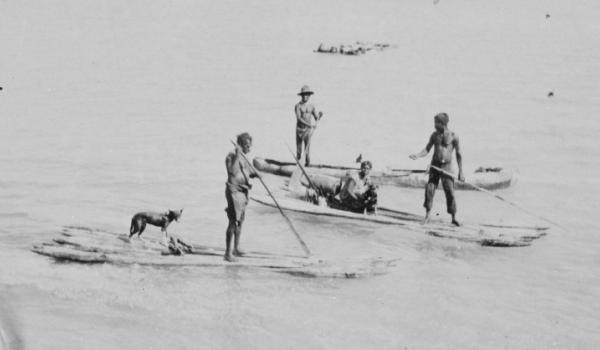
Aboriginal men on boats in Yampi Sound, ca.1930 Photo Frank Bunney SLWA