health

'Lab Rats' - Medical experiments on Aboriginal children in care

Body
Medical experiaments on children in Australia

There is one group in society so powerless, that its voice has not been heard. The abuses its members experienced should make all of those arguing about rights, morality, power, and the separation of Church and State, in the debate on stem cell research, sit up and take notice. Its members are the victims of the lack of church and state separation in past medical experimentation in this country. They are the children who lived in child welfare institutions and were used as real life “lab rats” in the pursuit of medical breakthroughs.

The urgent need for Australia to acknowledge it has a race relations problem

Body

White Australia must consider the damage that disregard generates, and understand that from the Aboriginal perspective, white ways are not the only ways, or necessarily the best ways.
 
Many of our survey respondents expressed a willingness to improve the relationship. But so long as white Australia is resistant to Indigenous inclusion on any terms but its own, it’s hard to see how progress can be made.

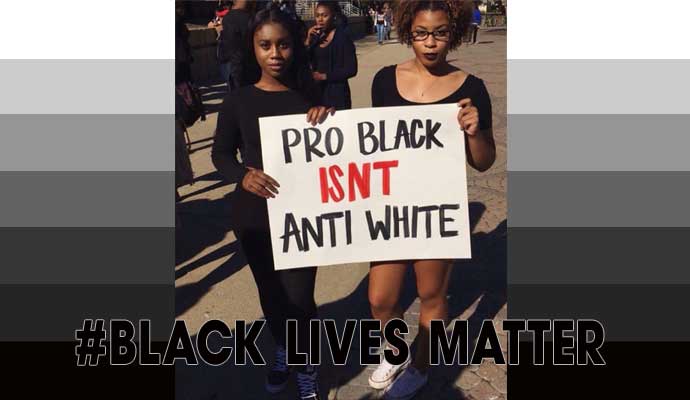
Why Being Pro-Black Isn't the Same as Being Anti-White

Body
Why Being Pro-Black Isn't the Same as Being Anti-White

When we have the courage and audacity to reclaim our own humanity, this is how we can heal, this is how we can be better to ourselves and to other people, and this is how we will change the world.

Four Reasons Why Being Pro-Black Isn't the Same as Being Anti-White

 
Wazi Maret Davis Everyday Femenist 16 November 2015

Why are so many First Nations kids in detention in the NT in the first place?

Body

Thalia Anthony, Associate Professor in Law, University of Technology Sydney

Across Australia, Indigenous children constitute at least 54% of children in juvenile detention centres. The proportion of Indigenous children in penal detention centres in the NT is higher than in any other state or territory: 97% of children in NT juvenile detention centres are Indigenous.

It’s a fallacy that all 'Australians' have access to clean water, sanitation and hygiene

Body
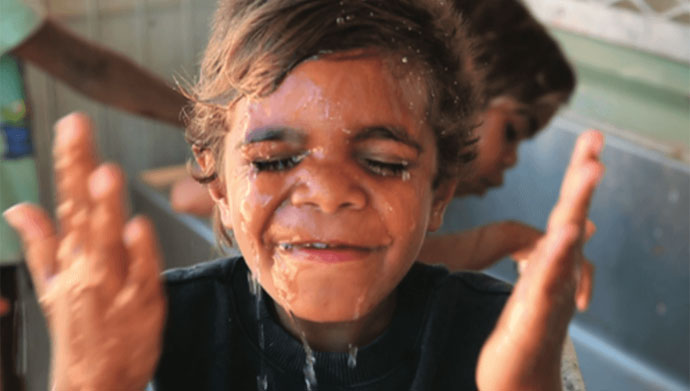
Clean water can help to break the link between poor hygiene and eye diseases such as trachoma.
(Central Australian Aboriginal Media Association [CAAMA])

Nina Lansbury Hall, Cindy Shannon, Paul Jagals 11 July 2016

Number of doctors in First Nations communities in WA expected to be reduced from 56 to 19

Body
Doctors reduced dramatically in the Kimberley

The number of doctors working in Western Australia's First Nations Community Controlled Health Services (ACCHS) will be reduced from 56 to 19 under a policy proposed by the Federal Government, according to the Aboriginal Health Council of WA.

"We currently have 56 doctors working in our sector. With this decision that will severely reduce that back to 19 doctors," the council's chairwoman Michelle Nelson-Cox told ABC Kimberley.