Before Invasion

Kitty Wallaby: Linked between the Dreamtime and the grim world of 1800's

Body

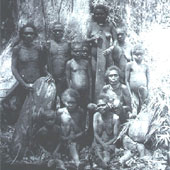
Kitty Wallaby's life was linked with the Dreamtime, and her people, the Gunditjmara in Western Victoria, built sprawling villages of stone houses and an aquaculture system that pre-dated Egypt's pyramids and Stonehenge. When Kitty told the invading pastoralists that is was her country, they were not interested in listening or understanding.

Human life in WA's Mid West existed 30,000 years ago, archaeologists say

Body

The first proof that humans lived in Western Australia's Mid West at the same time as humans in the Pilbara and South West regions has been found in a cave 50 kilometres north-west of Cue.
Previously, archaeologists had no established evidence that humans occupied the Mid West region more than 10,000 years ago. But charcoal associated with stone artefacts excavated in the Yalibirri Mindi rock shelter in the Weld Range have been shown to belong to ancestors of the Wajarri native title claimants living 30,000 years ago.

First Nation languages could reveal scientific clues to Australia's unique past

Body

The loss of Australian First Nation languages could obstruct access to unique scientific information regarding Australia's ancient geological history, according to a BBC reported.

Ancient legends on the continent passed down over millennia appear to verify recent scientific discoveries regarding Australia's ancient past. For example, cave art suggests an ancient knowledge of the heavens including beliefs in visits by ancient astronauts and a previously untapped record of natural history

Every important colonial building in Sydney replaced a significant First Nations city site

Body
Sydney City number 2

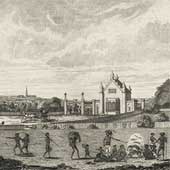
Sydney's current city is probably the largest urban system ever built from, and upon, an existing city framework and it was built in an unholy silence. - What if our present historical city was not the first urban structure to occupy the coastal region extending from Port Stephens to Kiama? What would this primordial city reveal, what lessons of history could we learn; just what of this first, pre-invasion Sydney was admitted, and what was denied in the making of our second metropolis?

Preservation or respect, The battle over the British Museum's First Nation Australian show

Body

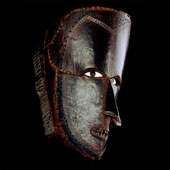
Should First Nations culture be preserved primarily in institutions, as too many paternal white politicians insist? Or is it best lived and nurtured in traditional lifestyles in home countries across the continent? It's been less than a century since the world's leading collectors began acknowledging First Nations art as more than mere ethnographic artefact.Since then, the most enlightened, from Hong Kong to London, New York to Paris, have understood that when you purchase a piece of First Nations art you become its custodian - not its owner.

Research findings back up Aboriginal legend on origin of Central Australian palm trees

Body

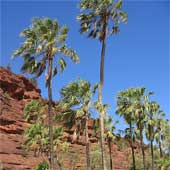
Several years ago Tasmanian ecologist David Bowman did DNA tests on palm seeds from the outback and near Darwin.The results led him to conclude the seeds were carried to the Central Desert by humans up to 30,000 years ago.Several years ago Tasmanian ecologist David Bowman did DNA tests on palm seeds from the outback and near Darwin. The results led him to conclude the seeds were carried to the Central Desert by humans up to 30,000 years ago.Several years ago Tasmanian ecologist David Bowman did DNA tests on palm seeds from the outback and near Darwin.

Research suggests First Peoples were firestick farming in North Queensland for up to 140,000 years

Body
First Peoples were firestick farming in North Queensland for 140,000 years

There has been evidence that the First peoples were on this continent 60,000 years ago, but the work of Dr Peter Kershaw's palynology (the study of fossil pollen) research suggests that the first peoples were on the continent as long ago as 80,000 years earlier than that.
When specks of prehistoric pollen and charcoal embedded in the ocean floor off the Great Barrier Reef were analyzed it was discovered an abrupt change in the fossil pollen was recorded around 140,000 years ago.

Tasmania: A Timeline of the History of First Nations People

Body

A comprehensive Timeline for the history of First Nations people in Tasmania. Also incded are some copies of John Glover's landscape paintings, including the Last Muster of Tasmanian Aborigines at Risdon. This painting tells the story of the last group of innocent Tasmanian Aborigines that remains in the Risdon Area before they were deported to Flinders Island. Glover thought the Tasmanian Aborigines would be extinct by that period of time, and when he died in 1849, there were only about 40 Tasmanian Aborigines still alive.

Carved trees of First Nations Peoples from Western New South Wales

Body
CULTURAL WARNING - Gamilaroi and Wiradjuri women should note that the Lore prohibits you to view the images on this page. CLICK ANYWHERE HERE TO LEAVE IMMEDIATELY

For thousands of years Aboriginal groups in central NSW marked important ceremonial sites by carving beautiful, ornate designs on the trunks of trees. The carvings, comprising symbolic motifs, intricate swirls, circles and zigzags, were intended to be long-lasting but, instead, only a handful of the trees on which they were carved are still alive today. This page includes many images of carved trees, a pdf booklet and Powerpoint links with more images and information to download.

Australian history curriculum - extension shelved but history choked

Body

A federal government Ministers meeting passed a resolution supporting the four broad themes for change outlined in the federal government's initial response, which are reducing the overcrowding in the curriculum, promoting a parent-friendly version of the curriculum, improving accessibility for students with disabilities, and rebalancing the curriculum with the removal of the 'overarching themes' of Australian First Nations, Asia and sustainability issues embedded in curriculum subjects.