Genocide

Shutting down Australia's First Nations Homeland communities

Body

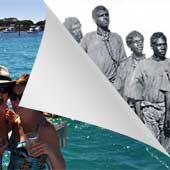
In an ultimatum, WA was offered $90m, enough to fund remote communities through to 2017. But as of June 2015, federal funding agreements will end, effectively giving WA authorities little time to work out how to fund remote communities in the future - and which ones will have to close. However, the racist government appears eager to continue the genocide of First Nations people and the dislocated people that don't end up slaving in WA's mines will end up in prison or living on the streets in nearby towns.

Terra nullius never went away

Body

Past experiences of forced removal off country have proved disastrous. The result is more fringe dwellers, social problems, suicides and incarceration. Western Australia already has the highest rate of incarceration of Indigenous people, around 20 times the rate of non-Indigenous Australians. In fact Barnett hypocritically admitted that it “will cause great distress to Aboriginal people who will move, it will cause issues in regional towns as Aboriginal people move into them.”

Queensland scientists discover 70 Aboriginal graves on Fraser Island lost for more than 110 years

Body

After more than a century the final resting place of about 70 Aboriginal people have been located on Fraser Island. - In July, a team of scientists from the University of the Sunshine Coast used ground penetrating radar to search the site of the old Bogimbah Mission on the western side of Fraser Island. Local Aboriginal rangers trained in how to locate and record historical sites had earlier identified the possible location of the graves, never recorded and thought lost to history.

United Nations told that 'Aboriginal Deaths in Custody' increasing at alarming rate

Body

The deaths of Indigenous people in custody in Australia has worsened, Not for Profit representatives, including disability advocates, have told the United Nation's Committee Against Torture. The hearing was told that there are many concerns for indigenous peoples in relation to Australia's compliance with the Treaty including the rate of incarceration of Indigenous people and secondly, the continuation of deaths of Indigenous people in custody.

Barnett tries to distance himself from plans to close over 100 remote communities

Body

The planned closure of more than 100 of WA's remote communities will have severe consequences, the Premier Colin Barnett said, but added his hands were tied. Barnett said this after a backlash was sparked in some of the First Nations communities, with elders leading a protest outside state parliament over the plans. His talk of high rates of suicide, poor education, poor health, no jobs are references to the economic, social and health issues that he will use as a tool to dump people on the streets.

Cuts to First Nations history planned in Victorian secondary schools curriculum

Body
First Nations culture

With all VCE history courses under review this year, the Victorian Curriculum and Assessment Authority has indicated that Koorie history will be cut due to declining enrolments. This leaves the one-year Australian history course as the only way for Victorian students to study Australian indigenous history in their final two years of secondary school. Given that the assessment of this body largely determines students' admission to university, teachers are under enormous pressure to adhere to the Study Design.

Wadjemup (Rottnest Island): the internment camp turned favourite holiday destination, without debate

Body
Rottnest - The Prison from Hell

It takes a unique country to name a century-long former internment camp as its favourite holiday destination. Such a country would either have to be one with rather macabre fascinations or a genuine interest in acknowledging historical injustices as a way of moving towards a better future. Or it could just be Australia.

The hundreds of Aboriginal men buried in unmarked graves probably aren’t an island drawcard for most tourists.

Survivors of 'forgotten' Woolwonga tribe acknowledged 130 years after 'extermination'

Body
The man identified only as Long Peter

The Woolwonga were said to have been exterminated in 1884 at Burrundie about 200 kilometres south of Darwin in reprisal for spearing non-Aboriginal miners.

But about four years ago an 1899 census document was found showing at least one had survived. Exactly how the girl known as Jennie survived the massacre of her people - the Woolwonga of the Alligator River near Katherine - is not known.

Pilbara bush meeting sees vote to challenge Aboriginal Heritage Act amendments

Body

Representatives from Pilbara Aboriginal communities are calling on the Western Australian Government to rethink proposed changes to the Aboriginal Heritage Act.

Around 200 people met on the banks of the Yule River, south of Port Hedland, last Friday, to raise their concerns about a lack of community consultation around planned amendments to section 18 of the legislation.

Remains of Robbins Island First Nations girl Naungarrika arives home after 200 years

Body

Around 30 First Nations men, women and children were killed and thrown from cliffs in 1828, in one the many British invaders mass murdering sprees. This is known as the Cape Grim massacre. The remains of one of the victims was a young girl named Naungarrika, who finally arrived back to her home state of Tasmania after 200 years of humiliation as a scientific and curiosity trophy.

The First Nations community will decide how to belatedly farewell Nungarrika, but it is likely to be in her own country.