Sovereign Treaty

MIND THE TREATY TRAP

Body
Mind the State Treaty Traps

The so-called state 'treaty process' of today threatens the inherent sovereign rights of First Nations. State agreements are not 'treaties' between Nations, they are private agreements.

Proper sovereign treaties have to involve negotiating rights between sovereign powers and negotiations commence on a full agreement that sovereignty was never ceded by First Nations in Australia, who continue to hold proprietary rights to all lands and waters in this country, as was confirmed in the Mabo case.
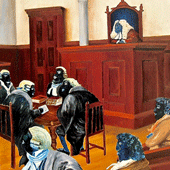
Colonial fraud against First Nations and Peoples: understanding 'non est factum'

Body
Colonial fraud against First Nations and Peoples: understanding 'non est factum'

Colonial law is a law that cheats all our Peoples out of our ownership of all our lands, water and natural resources and ownership of all of our native flora and fauna, which are our families through our Totemic Law rules.
Native Title laws keep us outside in the drought without shade and we are burning up, just like our native bush. The 'two bob black trackers' control all negotiations and dictate what they say our people should get and agree to.

Historical Background to the NAIDOC 2019 Theme: ‘Voice, Treaty, Truth’

Body
Historical Background to the NAIDOC 2019 Theme: ‘Voice, Treaty, Truth’

Our greatest fear is not whether we negotiate a Treaty, but the forcing through of the Recognition campaign for inclusion in the colonial Constitution. Ghillar, Michael Anderson, provides an historical insight into the NAIDOC 2019 theme ‘Voice, Treaty, Truth’, which reveals that each time First Nations Sovereignty rises up too powerfully it is suppressed in favour of the ‘trip wire to assimilation’. The ‘Voice’, of the NAC was shafted in 1984; the NAC ‘Treaty’ framework was dismantled and ‘Truth’ has barely been heard yet.

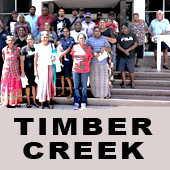
Timber Creek redress precedent - The options for First Nations

Body
The High Court hearing on the Timber Creek native title compensation case

Ghillar, Michael Anderson, Head of State of the Euahlayi Peoples Republic and convenor of Sovereign Union is proposing a number of options that First Nations might consider when seeking redress following the High Court’s decision in the Timber Creek case. The High Court recognised that Native Title claimants should be eligible for compensation for the ‘loss of rights to gain spiritual sustenance from the land’ among loss of other rights and interests’.

Treaties with the occupying colonial States and the Yulara Statement

Body
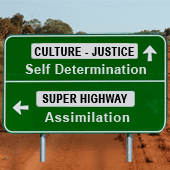
The crossroads to self-determination and assimilation

The Governments have been very clever in the last thirty years to use the disunity within our communities to withdraw funding and shut down burgeoning successful community organisations. The Governments achieved the total destruction of these organizations by the First Nations lackeys, of whom there are plenty, to shut down our hard fought for successes and now these communities have nothing. The regurgitated Constitutional Inclusion/Recognition and the Yulara Statement have been rejected by the grassroots across Australia. It's still being pushed by blacks living off blood money

Dangers of a single Treaty

Body
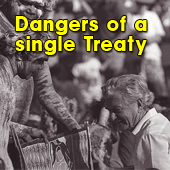
Dangers of a single Treaty

The three-day Treaty Talks Workshop on 23-25 January 2018 are welcome but, and there is a but, it has to be understood that a single Treaty, be it State or Federal, will cause more damage to our various Sovereign Nations than the Native Title Act as amended.
I offer this warning to our people that, if each respective Sovereign Nation fails to stand up for itself and take ownership of their own future, your People will stand to lose much through the process and ambition to negotiate a single Treaty.

Sovereign Treaties under International Law

Body
SOVEREIGN TREATIES UNDER INTERNATIONAL LAW

Sovereign First Nations hold the Law of the Land, the continental common which has never been taken away. No-one can legally take a country through genocide and massacre. Commonwealth of Australia rules in right of the Crown of Britain, that's why all laws are assented to by the Governor-general and State laws are assented to by Governors, representing HRH Elizabeth II.Commonwealth of Australia does not have its own sovereignty but depends on Britain's sovereignty. Treaties under international law are between Sovereign Nations.

WALKOUT STATEMENT Aboriginal Embassy Statement from the Sacred Fire

Body
WALKOUT STATEMENT

Aboriginal Embassy Statement from the Sacred Fire
'WALKOUT STATEMENT' Opposing Constitutional Recognition and Manufactured Consent
- We, the First Nations People who gathered at the Sacred Fire of the Aboriginal Embassy on 24-25 June 2017, reject the ‘Uluru Statement from the Heart’ and its’ Guiding Principles. The ‘Uluru Statement’ is a reflection of the corrupt proceedings of the Referendum Council’s Regional Dialogues and the National Constitutional Convention.

Always independent: An interview with Murrawarri Republic Chair Fred Hooper

Body

This weekend in Brisbane, the Referendum Council is holding the last of the Dialogues : a series of meetings with First Nations peoples to discuss the issue of recognising the nation's Indigenous people within the Australian constitution. The findings from the meetings will be reported at a First Nations Convention at Uluru in late May.
However, for many Aboriginal and Torres Strait Islander people constitutional recognition is a token gesture - Fred Hooper Chairman of Murrawarri Republic explains the process his people have taken to declare their sovereignty.

New Zealand’s Indigenous reconciliation efforts show having a treaty isn’t enough

Body
NZ Treaty

The relationship between Maori and the British Crown (which delegated its authority to the New Zealand government) has historically been filled with broken promises. Maori reached their nadir at the turn of the 20th century when their population had fallen to half of what it was at first contact - According to Senior Researcher in Maori Studies, Massey University, New Zealand. Ever since the 1840 signing of the Treaty of Waitangi, a raft of government initiatives have resulted in Maori losing both resources and power.